Showing posts with label South Korea. Show all posts

Saturday, 26 November 2011

Pameran Pendidikan Korea 2011, Jakarta - Indonesia


Event Name : 2011 Korean Education Expo in Jakarta, Indonesia

Venue : Balai Sidang Jakarta Convention Center

Time : 2nd ~ 3rd of December 2011, 10:00 - 17:00

Contents : Consultation with every university (34 universities), introduction and promotion by each university, Global Korea Scholarship and TOPIK (Test of Proficiency in Korean) presentation, presentation about personal experience in studying in Korea by Indonesian students, door prize, and so on.

Participants : Kangwon National University, Kyonggi University, Kyungdong University, Kyungpook National University, Kyunghee University, Keimyung University, Korea University, Kongju National University, Gimcheon University, Kimpo College, Duksung Women's University, Sangmyung University, Sogang University, Silla University, Ajou University, Yonsei University, Inha University, Chungnam National University, Hanyang University, Seoul National University of Science and Technology, Taekyeung University, Woosong University, Dong-eui Institute of Technology, Mokwon University, Kangnam University, Dong-A University, Soongsil University, Kookmin University, Chung-Ang University, Konkuk University, Daejon University, The Academy of Korean Studies, and so on.

Wednesday, 2 November 2011

Update! Price in Korea.

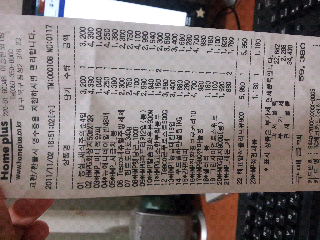
Hari ini abis belanja di Homeplus. Mostly sayur mayur dan makanan. Kaget juga pas liat totalnya karena udah lama ga belanja sebanyak ini @@ total 23 items : 59,380 Won. Silahkan cek kurs korean won di internet. Berikut detail harganya yang mungkin bermanfaat buat yang akan tinggal di korea :)
Veggie ramyeon 4 bungkus 3200
toilet tissue 12 roll 4390
Bawang merah 1 pack (ga tau isinya berapa siung) 1040
pantyliners isi 48 4250
bayam 1 pack 1380
sabun cair cuci piring 500 ml 2300
hunts tomato paste 340 gr 2750
wortel 746 gr 4100
paprika 2 buah 2990
calcium fresh milk 930 ml 1940
tahu 1150
corn flake 500 gr 3580
telur 15 butir 3400
gula 1 kg 1680
daun bawang 1280
organic brocolli 4730 (jreeeng baru nyadar pas ngetik ini klo gw salah ambil brokoli. Haaaa :(( gile baru nyadar mahal banget harga yg organic. Salah beli, gw kira td gw ambil brokoli yg biasa)
bawang putih udah dikupas 980
seledri 1 pack 1180
jagung manis kalengan 1100
kentang 900 gr 1920
lemon 880
olive oil 900 ml 5950
bokchoy 1 pack 1180
*harga dalam mata uang korean won
kesimpulan: makin lama tinggal di sini, harga2 semakin mahal bo..

Thursday, 22 September 2011

고양이 열리는 나무 (goyangi yeollineun namu): a cat cafe in Daegu


I went to a cafe called 'goyangi yeollineun namu' in downtown area of Daegu, an ordinary cafe where you can enjoy some drinks and cakes or waffles while playing with a lot of cute cats. I called it 'Cat Cafe'. It is located near the cellphone store alley. Actually, my friend is the one who asked me to go with her to this cafe since she loves cat very much. She said she has 14 cats in her hometown. Wow!

So we planned to go on last weekend to this cafe. I was very amazed at the first time when I opened the door. I see a lot of cats running, walking, stepping on the table and sleeping everywhere inside that cafe. It was a little bit smelly but I think cat lovers do not care about it. Haha.. They just like to see, hug and play with the cats.

My friend was fasting at that day so It was only me who ordered food and drink. I ordered a plate of waffle ice cream (6,000 KRW -- my friend paid for this ^^) and a glass of peach ice tea (4,000 KRW). Standard menu but I think it is enough to accompany you playing with the cats. Be careful also when the cats jump on to your table. They can ruin your foods!

Wednesday, 21 September 2011

[WSK Story] A Five-Day Market in Jeju

A Five-Day Market in Jeju
We can figure out culture and customs in traditional markets. I’d like to introduce you a five-day market in Jeju island which presents its own culture and customs.
A five-day market opens five days in a row per month, however, just 40 and 50 years ago, it was nothing but a normal market crowded with people. As time goes by, the market has modernized, but unfortunately nine markets remained so far.
A Five-Day Market in Jeju, History and Tradition
It is not clear from when the five-day market started in Jeju. Academic circles estimate the market started at front yard of Gwandeokjeon in 1910. According to the record, it opened every second and seventh day in lunar calendar. Many items such as crops, clothes and daily necessity were sold or bartered for.
The market is not only for selling and buying products but for communicating with people in town. Every market has its own characteristics. For example, some deal with seafood, others deal with farm products. Currently, it has been modernized and improved for consumers, and delivery and customer call service became common as well. It also has a quality guarantee service. They even provide the arcade for children, stroller, and cart to young mothers to make them feel comfortable while shopping.
Transformed into Cultural Tourism Market
Now, the five-day market became very popular with other tourist attractions in Jeju, such as ‘Olleh’ roads. As an effort to boost the economy, Seogypo market changed its name into ‘Olleh’, after then, even people from other local markets visit there for benchmarking.
Actually, Seogypo market was in depression but the atmosphere has been revived since it connected the tour business with the sixth course of Olleh. Moreover, promotion effect has been doubled after the Small and Medium Business Administration and Market Promotion Center chose the market as one of the “50 traditional markets to go”.
According to Jeju government, the number of visitors per day increased 8,000 from 6,000. Daily sale went up to 80 million won, increasing by 20 million won. Jeju seller association has already registered Maeil Olleh market as the trademark. With this effort, over 2,000 Olleh hikers visited to the market, which is twice as higher than that of last year.
More than 1,000 government officials and merchants have visited to benchmark Olleh market from all across the country. More Olleh hikers have come to Dongmun market as it became the 18th course of Olleh. Hanlim maeil market is connected to 14th course of Olleh, and Daejung five-day market is connected to 11th course of Olleh. Seogypo Maeil market is designated as the cultural tourism market of the year 2010 and 2011. Seomun market will soon plan to develop other Olleh courses.
Meanwhile, a person concerned to the market said that DID (Digital Information Display) will be installed in sixth course of Olleh in order to provide information of food, products, hot sale events in Jeju to all visitors. They expect many of them will come to markets as well.
So, if you want to feel 100% of the culture and custom of Jeju, this is the best season. Don’t forget to bring camera!

source: Korea Brand Blog

Sunday, 24 July 2011

[WSK Story] New wave of IT world rushing in

'Cloud Meets Big Data’ was the hot issue in IT Forum which was recently held in COEX Convention Center. Cloud Computing has been the main stream of Korean Internet services since last year. It sounds little far from your daily life, but over 10 millions are using the Cloud service. Let’s take a look before it’s too late.

Hot issue in IT World, elusive Cloud computing

Cloud computing is defined as a computing environment providing services through internet servers such as a data storage, network, and contents at the same time according to Naver dictionary(http://100.naver.com). In short, we put all data together into servers of data center so we could use them whenever we need. Just like the clouds intangible, the space doesn’t exist in computer, but we can handle them freely

Let’s take an example with an email. Whenever you log in, you’ll receive emails or data. Your computer actually doesn’t have the storage for data but you can take them out from the internet server. This is a basic concept of it.

Cloud computing is a technology that you can use the Operating Systems(OS) such as Windows, and Mac, and Word processor, Office, Photoshop, Games and all kinds of application programs and the saved data with certain payment. Many of Korean corporations and government organizations already adopted the service or moving to adopt it. IT service companies are providing a large webhard-type of cloud service for individuals as well.

Faster, Easier and Cheaper

The advantage of the Cloud Computing is that you can save the space and costs. All you need are a monitor, a keyboard, a mouse and the network function, and you just have to pay as much as you use. The other advantage is that you can use the data anytime with a variety of IT devices such as computers, tablet PCs, and smart phones.

For its cost effectiveness, the Cloud computing system is much more attractive to businesses than to individuals. With the Cloud Computing system, employees just need internet-accessible computer instead of expensive PC and software. In terms of security, the authentication process prevents the security breaches and information leaks.

Firstly, the server stability and the security must be guaranteed for Cloud computing. In fact, a cloud computing service in the US was down for two hours with a huge loss. In this case, users’ loss must be tremendous. In terms of security, like DDoS, servers can be the target for hacking or attack. Strict security solution should be prepared to prevent such a horrible damage to data center

Seize the Growth Engine of Future Korea

The scale of the world Cloud Computing market is expected to grow from 31 billion dollars in 2011 to 60 billion dollars in 2014. It is the trend that world class IT businesses and venture companies consider the Cloud Computing a key industry in the future. Global competition for Cloud Computing among business and individual market is already underway

In response to global competition, Korean government announced the strategy last month that they will increase the Cloud Computing adoption rate up to 15%. The official said that they will improve the legal system in order to promote the growth of Cloud Computing market. In addition to encouraging government agencies build up Cloud Computing infrastructure in a certain percentage, Korean government support small businesses so that they can be a global competitor through combining data center with Cloud Computing.

Korean companies are set to Cloud Computing service. IT companies sell their services such as large scale Cloud Computing and virtualization solutions. They move ahead with international companies to be the leader in the world market of Cloud Computing market

Korean mobile service company K on June 30th made an agreement of joint venture together with Japanese company S. K has a plan to build up data center in Kimhae, Gyeongsangnam-do so that they could provide data service for not only Japanese companies but also for Asian companies within a radius of 2,000 km. Global e-bay company E announced last 13th they will build up data center in Busan to support Korea, China, Japan, Singapore and Australia branches. Prior to it, US IT company opened a data center in cooperation with Korean Insurance Company K in Songdo, Incheon city last November. It appears that more companies will open data centers in Korea

The key reasons for these trends are geological conditions, less natural disasters, stable and low cost electric service and reliable internet service. In particular, IT infrastructure is the most highly graded. With these strength and advantages, we are looking forward to being a leader in data center hub through Asia and global competitor in the world cloud computing service market

[WSK Story] Yeosu, the Host City of Expo

With one year left before the opening of the Yeosu Expo, the Organizing Committee is very busy in preparing the world event, drawing attentions from many countries. Focusing on one specific subject, “The Living Ocean and the Coast- Diversity of Resources and Sustainable Activities”, Yeosu will present something different.

It is very meaningful that the Expo focuses on specific topic and shows the future of the human activities.

Shall we take a look at Yeosu Expo?


Mosageum beach, a taste of Yeoso Ocean  

(Source: Korea Tourism Organization)

Lonesome and silent, the scenery of Yeosu Ocean is considered the best. Even people living near the ocean visit Yeosu to feel the cleanness and calmness. If you want to feel the Yeosu Ocean, Mosageum beach is the exact place.
Mosaguem beach is not as big as other beaches in Korea. However, the surrounding scenery is very beautiful and two naturally-created beaches make Mosaguem more special.

(Source: Korea Tourism Organization)

Both beaches are made up of small pebbles and soft sand. The sand is so soft that your feet will be deeply submerged in. In addition, it is good for parents to play with their kids around. Well, we also recommend you to take photos of the pebbles, which is nature itself, or to go fishing by the rocks on the seashore.
Mosageum, the treasure of Yeosu, has been well known for beautiful sand. Why not come down here for family vacation?
  
Enjoying Strange Rocks and Bizarre Stones of Baekdo Island

(Source: Korea Tourism Organization)

Now, you would understand why Yeosu Expo focuses on ‘Marine World’ and how that attracts so many people.  
On the other hand, there is another island which has been recognized by many well-known people around the world. Baekdo-island. It has 99 peaks, including small rocky islands.

(Source: Korea Tourism Organization)

You can get around the island with a boat. It is interesting to see very unique styles of each island. For an example, you will find the large rock with a naturally carved hole that has become the shelter of the sea birds. Like this, Yeosu Ocean has an unlimited potential with a magnificent landscape of a variety of rocks and Geomundo Island floating on the ocean which is an hour distance by a boat. Clear blue sea will tell that Yeosu will be the perfect host city for the Great Marine Expo.
Do not miss it!

Children’s favorite, Marine Science Museum, Jeollanam-do


(Source: Korea Tourism Organization)

Both Yeosu city and Yeosu Expo are not for the adults, but also for children. Children can also enjoy the both. The Marine Science Museum in Jeollanam-do will satisfy the curiosity of children.
Opened in 1998 and renovated in 2005, this museum introduces the beauty of National Marine Park of Dadohae and contributes to promoting tourism of Yeosu city.

You can see the native aquarium fish in the biggest cylinder-shaped water tank, the turtles living in the largest aquarium in Korea, and the mud flat aquarium which just look like a real one. 
The ‘touch and feel’ aquarium is the most favorite for children. All visitors can touch the top shells, craps and other marine creatures. For more details, check the website http://www.해양수산과학관.kr

Wishing for Success of Yeosu Expo

nd Meeting of Participating Countries of Yeosu Expo 2012>
(Source: New Media Team, Yeosu Expo 2012)

Since the Daejeon Expo, Yeosu Expo will gather the worldwide attention. They have a huge ambition of decorating the whole ocean as the fairground for the Expo for the first time ever in 150 year-old history of World Expo.

From small beaches to dark blue ocean with strange rocks and bizarre stones, and the space for the firsthand experience of the ocean, Yeosu is just perfect enough for ocean city. Shall we take fresh air in Yeosu this summer with the expectation for the coming Expo?

Tuesday, 19 July 2011

South Korea: Economic Growth


How well do you know Korea? Come and meet the charms of Korea at Touch Korea! You are warmly invited!


Tuesday, 5 July 2011

[WSK Story] Road Trip in Jeju

Jeju beach with emerald tints and peculiar living rocks are very beautiful like the fine paintings. You can have beautiful scenery by just pressing a button on your camera. In addition, driving the offshore will make you refresh your mind.

You will realize that time flies so fast when dropping by some attractive places while driving the offshore road. Now we will introduce you the must-go places in Jeju island.


Dive along the Green Forest!

The road which will be now introduced is 516 Forest Road Tunnel that was built for the first in this island. It is a shortcut from Jeju city on the South to Seogwipo city on the North of the island, crossing Mt. Halla. It definitely reduced the travelling time and is quite faster than the other ways. The road is rather zigzag, however, once you pass the Sungpan Rest Area, you will meet the trees that just look like a tunnel. While passing the tunnel we will feel as if the trees were greeting you.


(Source : AsiaToday)

On your diving, you will see the Sancheon-dan altar for Mt. Halla and Sungpanak, the tracking course. Suakvallley is made of clear water from Baeknok-dam, the lake located on the top of the Mt. Halla. It ia connected by thick forest and azure sky.it's virgin forest and it's changed by the season. The road is lined up with Jeju typical trees and there are grazing ponies, too. 516 Forest Road Tunnel is thickly wooded and keeps the cool temperature even in summer. When you pass the tunnel, turn off the air-conditioner and open the car window to feel the beauty of nature.


Sagye Coastal Road

Sagye (four seasons) Coastal Road is an absolutely wonderful road which will surround you by the sea breeze and wind. As the Mt. Sanbang and Mt. Songak are located at each of the end of the seashore, the driving course is even peaceful and comfortable. Drivers can get the full view of the sea as well. Everyday many visitors are passing this beautiful coastal road to see the harmonized seashore, mountain and roads and all the beautiful sceneries around with its breath-taking sunset

(Source: Korean Tourism Organization)

We can see not only the Sagye seashore not only the Brothers islands guarding the South Sea, and away from here, we can also see the Gapa island and southernmost island, Mara island. Recently, the SagyeCoastal Road was designated as "One of the most beautiful 100 roads in Korea" by the Ministry of Construction and Transportation. After 50 minutes of driving along the No.95 local road from Jeju city, you will reach at a town which is the entrance of the Sagye-ri harbor. Then, go toward the beach about 5 minutes, and you will be dazzled by the coolest sea in front of you.

This area is also famous for the Asian-first human’s footprints fossil of the Old Stone Age. There are other footprints of the elephants, dears and birds as well. Archeologists said this geographical strata was created in the fourth stages of the Cenozoic era 50,000 years ago. Since it was reported on the news, a number of tourists are continuously visiting here to see the fossils by themselves. However, since the Cultural Heritage Administration designated this area as one of the state-designated natural monuments, it has been impossible to enter the area.
Some people leave their car and take a walk around the area to see the Mt. SanbangBrothers islands, Gapaisland , Mara island, and Mt. Songak. We hope you enjoy the road trip on Sagye Coastal Road.


Cedar Forest

Well, driving along the coast would be so good, but there is other driving course you would also be excited. It is the 27.3 km-long Rd. No.1112, which connects Gujwa-eup Pyongdae-ri and the Rd. No.516. The way ahead is full of cedar.


(Source: Munhwa Ilbo)

This road was awarded a grand prize by the Ministry of Construction and Transportation in 2002. It's very exotic as if you were in somewhere in north-American forests. Actually, this place appeared in many of CFs, movies and TV dramas. About 2,570 typical Jeju trees are growing wild here and make us feel refreshed when driving through or walking through the road.

Jeju driveways are full of blue water, beautiful estuary, cedars and secondary volcanoes. Why don't we leave for Jeju this Summer?

Friday, 1 July 2011

Homeplus Subway Virtual Store

Let me introduce you about homeplus. Homeplus is a South Korean/British discount retail chain jointly owned by Samsung and Tesco. It operates hypermarkets and also home delivery shopping service. Though it is the second largest retailer in South Korea after Shinsegae Group, homeplus is my favourite place to do grocery shopping because it is very convenient, cheap, and close to my house. I registered a free homeplus membership and got a lot of discounts from it.


I usually go to there twice a month to buy some foods, vegetables, drinks, and others. Few days ago I went there with my friend and found some machines that attracted my intention. Self-service checkout. It really amazed me! So after I got all of things that I wanted to buy, I didn't go to the ordinary checkout but I went to the new self-service checkout. Haha.. That was kinda new things in homeplus so many people tried those machines and still the store clerk helped and taught them how to use those. Very interesting! You just need to scan the barcode of products and the machine will automaticaly recognize the product. After you finish scanning, choose what kind of payment you want to use, and bring your shopping things home. At that time, I paid it by debit card. The store clerk helped me to insert the card into the slot provided. I was wondering how if I want to pay by cash and I found that there is a slot for inserting your money, just like in the vending machine. Wow! I was amazed. It is so easy and fast. I love it!

photo courtesy of travel-avenue.com
Just a moment ago, I found this video from my friend's facebook.


Korea.. I don't know what more to say.. you are just sooo hi-tech..!
This is what I imagined some years ago.. and now I see it directly, It really exists and I can't believe that I am living in this hi-tech country. Alhamdulillah...

Thursday, 16 June 2011

Convenient Traffic System of Korea

Buat yang pernah mengunjungi Korea, pasti setuju deh dengan judul di atas. Hampir semua orang asing yang tinggal di sini atau yang pernah datang ke sini pasti bilang kalau sistem transportasi di Korea itu oke banget. Di Korea kamu bisa pergi ke mana aja dengan menggunakan bis atau subway yang aksesnya sampai ke mana-mana dan yang paling penting adalah aman dan bersih.

Sistem transportasi di Korea saat ini dikenal sebagai salah satu contoh yang terbaik di dunia. Padahal sebelumnya banyak orang Korea yang mengeluh karena jalur-jalur subway dan jalannya ribet banget dan ga efektif. Tetapi akhirnya dibuatlah sistem diskon transit dan sistem subway yang dilengkapi dengan sarana-sarana yang lebih baik dari sebelumnya.

Di Korea ini, ga ada itu yang namanya persaingan untuk mendapatkan penumpang sebanyak-banyaknya di antara perusahaan pengelola bis dan subway. Nah, ini salah satunya yang saya suka. Saya juga pingin nanti suatu hari Indonesia seperti ini -- ga ada lagi pemandangan angkot-angkot ngetem, bis-bis ngetem yang ujung-ujungnya cuma bikin jalanan jadi macet.

Selain itu, di Korea juga ada sistem diskon buat transit alias ganti bis atau subway yang tentunya bisa menghemat pengeluaran kita. Katanya sistem ini cuma ada di Korea lho (klo ternyata sistem ini udah ada di negara lain, mohon infonya yaa^^). Karena itu, banyak orang-orang yang tugasnya membuat ketentuan di negaranya, datang ke Korea untuk mempelajari lebih lanjut tentang sistem ini. Di sini juga udah biasa untuk membayar tarif bis dan subway menggunakan kartu digital yang bisa diisi ulang. Sistem ini juga pasti udah banyak dipraktekkan di negara lain.

Yang saya suka juga dengan sistem transportasi di Korea ini adalah penandaan rute bus dengan warna biru, hijau, merah dan kuning; dan juga penandaan jalur subway menggunakan warna.

Subway Korea juga terkenal dengan kebersihan dan keamanannya. Pingin banget deh di Indonesia juga punya sarana transportasi yang bersih, aman, dan teratur kya gini. Katanya negara Filipina berniat untuk mengadopsi sistem ini lho untuk negaranya. Mungkin ada baiknya juga kalau Indonesia belajar dari Korea untuk sistem transportasi ini dan mengadopsinya. Apalagi kalo ditambah dengan BIS (Bus Information System) dan BMS(Bus Management System)nya. InsyaAllah ga ada lagi yang namanya macet di Jakarta.


Saturday, 28 May 2011

Jin Golmok (진골목): The Hidden Alley in the Heart of Daegu

Jin Golmok is an old Alley located near Daegu's downtown where you can feel the situation of year 1950s in Daegu. Jin Golmok can be one of your destination if you come to South Korea!

Feel the 50s, feel Daegu!


Saturday, 21 May 2011

WSK Story: Let’s Go Inside the Love Story of Chun Hyang and Mong Ryong!

We see many ‘Couples of the Century’ through numerous media. Whether they are real couples or the fake ones, the range of couple are limitless. For example, world famous football star David Beckham and the member of the world pop girl group ‘Spice Girls’, Victoria Beckham became the couple of the century since their marriage. There are also fictional couples beloved by many in the world. In Jane Eyre, the famous and influential western novel, the love between Jane Eyre and Edward Rochester has been remembered among readers until now. Then, is there any ‘Couple of the Century’ in Korean classical literature? Absolutely, yes! Chunhyang and Mongryong, they are the familiar names to Korean. The novel was adapted for pansori, book, film and even drama, beloved by many fans. The main character, Chunhyang, built an image of active woman in Joseon Dynasty, and now she became the representative image of Korean woman through the various performances carried overseas. They are truly a couple of the century that presents Korea.

Unfortunately, there wasn’t any place to remind us of their love story. Every story was supposed to be alive in the reader’s imagination, however, if the readers can see and look around the virtual place that helps understanding of the full story of ‘Chunhyang-jeon’, visitors would definitely enjoy the story with the scenery. Well, from the idea and demands, ‘Namwon Chunhyang Theme Park’ finally opened on May 2004. Theme park is the place for entertainment attractions that has landscaping, buildings, and attractions that are based on one or more specific themes. The ‘Namwon Chunhyang Theme Park’ is ready for couples with the gist, ‘We invite those of you who have someone in love with!’.

We have everything in Namwon Chunhyang Theme Park!

(Source : Korea Tourism Organization), (Source : Busan Ilbo)

‘Namwon Chunhyang Theme Park’ is comprised of mainly 5 places- ‘Meeting Place’, ‘Pledge Place’, ‘Love and parting Place’, ‘Hardship Place’, and ‘Festival Place’. When you enter the theme park, you will see the facilities and structures that are well-matched to each place. At ‘Meeting Place’, you will see swings where Chunhyang and Mongryong first met, a fountain, and a cultural museum. At ‘Pledge Place’, you will meet a stone tower over the ring-shaped bridge ’Okjihwan’ which means a declaration of love. You might also find some couples in front of the tower, piling a stone on it and tying a small piece of wishing paper. In addition, ‘Pledge Place’ is quite a famous place to couples among other theme places. When a couple put their hands inside the ‘Pot of Pledge’, the love song ‘Sarang-ga’ comes out of it. At ‘Love and Parting Place’, you will see the ‘Buyong-dang’ where Chunhyang and Mongryong spent their wedding night, and the house of gisaeng ‘Wolmae’, Chunhyang’s mother. Also there is a workshop that you can experience the ‘seonbi’s style and arts, and even commoners’ culture in the middle era of Joseon Dynasty. ‘Hardship Place’ is also a place that attracts tourists. There is a rebuilt jail that Chunhyang was imprisoned, and the investigation office which has a stick for flogging criminals. The stick is remade for visitors to try and have fun, so you can try it, too. Finally, at ‘Festival Place’, there are many places to relax for visitors, and private theme school for writing letters with a brush. Once you use the brush, you will feel as if you were a writer going back to Joseon Dynasty.

Enjoy the whole Namwon!
(Source : Korea Tourism Organization)

The introduction of the ‘Namwon Chunhyang Theme Park’ is all over. However, there are more reasons why Namwon is getting attractive. If you look are the other museums and entertainment attractions will give us satisfaction more than ever.
In ‘Chunhyang Cutural Arts Center’ which is located in the theme park, the performance of the intangible cultural asset that was designated by the province holds on regular basis. You can also lend the hall in advance. Please take a look at the performance schedule posted on the homepage of Namwon City Hall.

Besides, you can participate in making a pottery in the traditional cultural center in the theme park. It will be a wonderful memory for you to bring, considering it is neither a plastic, nor a porcelain dish that we see commonly in our daily life. The theme park will give you a meaningful experience on Korean traditional culture as well as Chunhyang’s love story. 
This is not the end. Since last fall, the newly started festival of Namwon will give fresh opportunity to visitors. The marching parade which starts from every Saturday and Sunday from 2pm to 5pm is named the ‘Newly-appointed governor’s arrival’. As the parade marches from Gwanhan-ru to Theme Park, which is 2Km long, it will be a ‘must visit’ for those of you who love traveling.

For those of you who want to experience Chunhyang’s love and passion, we recommend you to visit Gwanghan-ru, and Chunhyang shrine. Gwanhan-ru which is famous for the place where Chunhyang and Mongryong first met each other provides splendid scenery in any season. Chunhyang shrine is the place that was built to honor the Chunhyang’s sincere love toward Mongryong. The bamboos planted around the shrine are standing strong and straight as if it showed Chunhyang’s nobel beliefs and principles. The letter ‘Dansim’ which means sincerity that presents Chunhyang’s character will touch the bottom of every single visitor.
In 2012, Yeosu will host the Expo, the world cultural festival. As the festival is expected to draw public attention to Jeolla province, most of the area is spurring the preparation for Expo. Of course, Namwon is not an exception. Namwon already selected several restaurants to recommend during the Expo and is now working on the promotion. In addition, Namwon Chunhyang Theme Park planned last February to provide more entertainment for visitors, overall which shows how Namwon is trying so hard and put a lot of efforts on it.

‘Namwon Chunhyang Them Park’ stands still as it is the first theme park that targeting the classical literature in Korea. Although the novel was written a half century, the love between Chunhyang and Mongryong would have something special that transcend the flow of era. We hope that you can experience the amazing and beautiful power that makes their love and even the entire Namwon as a one cultural heritage over half a century. Do you have someone you love? Then, move your step to the ‘Namwon Chunhyang Them Park’.

Sunday, 8 May 2011

Daegu Modern History Museum (근대문화역사관)


Located in the central of Daegu, this museum was just opened for the first time on January 24, 2011. It is opened in a building built by Japan in 1932 which was a regional branch office of the Joseon colonization industrial Bank. Before the government renovated it into a museum, the building was used as a branch office of the Industrial Bank of Korea. It has two floors and one basement and provides a featured exhibition room, hands-on exhibition center, a library and classrooms for cultural activities and lectures.

If you want to visit this museum, you don't need to pay an admission fee and you can go there between 9 am until 6 pm everyday except Monday.

Friday, 29 April 2011

Daegu Yangnyeongsi Herb Medicine Culture Festival


Come.. come.. to one of the big festival in Daegu, the 34th Daegu Yangnyeongsi Herb Medicine Culture Festival which will be held on May 3 until 7 at Namseong-ro (Yakjeon Alley), Junggu Daegu and Yangnyeongsi Oriental Medicine Cultural Center.

This festival was held for the first time on 1978 and until now, is being held continuously in the first week of May every year at Yakjeon Alley (약전골목). The main theme for this 34th festival is '약령시로 떠나는 건강한 소풍' (An healthy trip to Yangnyeongsi).

Many programs have been prepared for this festival such as culture walking tour, experience events, musical performances, exhibitions and so on.

Gyeongsang Gamyeong Park [경상감영공원]


Lanjut cerita di hari Sabtu, 2 April 2011...

Hari itu kami semua berjalan kaki dari Daegu City Hall ke Gyeongsang Gamyeong Park. Ini bukan kunjungan saya yang pertama karena dulu tahun 2007, saya sempat berkunjung ke sini bersama Icha di musim panas menjelang musim gugur.

Gyeongsang-gamyeong Park dulunya merupakan lokasi kantor gubernur propinsi Gyeongsang di Daegu yang dipindahkan ke tempat ini sekitar 400 tahun yang lalu. Pada tahun 1970, taman ini bernama Jung-ang Park (Central Park) karena berada di tengah Daegu. Taman ini dibuka kembali pada bulan Oktober 1997 setelah dinding yang mengelilingi taman ini diruntuhkan. Di taman ini terdapat Seonhwadang hall yang dulunya merupakan kantor gubernur, Jingcheonggak pavilion yang dulunya merupakan rumah gubernur, dan 29 monument yang menjelaskan tentang prestasi-prestasi dan pencapaian yang telah diraih gubernur di masa itu. Kita juga bisa melihat lonceng raksasa yang berbentuk heksagonal dan patung "Citizens' Tree" di taman ini.

Menurut saya taman ini sangat cocok untuk dijadikan tempat untuk bersantai-santai karena taman ini dipenuhi pohon dan apalagi pada saat musim semi seperti ini, bunga-bunga cantik sedang bermekaran dengan indahnya. Tidak heran jika kita pergi ke taman ini, tidak hanya pemandangan pohon-pohon dan bunga-bunga cantik yang terlihat tetapi juga pemandangan kakek-kakek yang sedang duduk-duduk santai di kursi-kursi taman. Hampir semua orang tua di Korea memiliki hobi duduk-duduk di taman. :D

Oia, di tempat ini saya berhasil menjalankan misi yaitu mencari kertas berbentuk lingkaran berwarna biru muda. Setiap orang yang berhasil mendapatkan ini akan mendapatkan hadiah dari Daegu City Hall. Huhuyy, what a lucky day!

How to get there: 503 Bus from Kyungpook National University Main Gate, get off at Gyeongsang Gamyeong Park bus stop.

Next after this: Daegu Modern History Museum


Saturday, 23 April 2011

2 April 2011

Akhirnya..

Para pembaca yang budiman, jadi ini lho sebenernya yang pingin saya ceritain dari tanggal 2 April kemaren yang akhirnya baru bisa saya tulis sekarang. (Moodnya baru muncul sekarang, haha. Mohon maklum).

Jadi ada apakah di tanggal 2 April kemaren?

Jadi gini ceritanya...
Waktu itu saya menghadiri acara "Welcoming Ceremony and Culture Tour for The 1st Daegu Social Media Group" di Daegu City Hall. Apa itu Daegu Social Media Group? Ini adalah merupakan grup yang terdiri dari mahasiswa-mahasiswa international di kota Daegu. Mereka ditugaskan untuk menyebarkan info sebanyak-banyaknya tentang Daegu terutama kepada orang lain melalui social networking media seperti blog, facebook, twitter, dsb.

Aktifitas ini sebenernya terinspirasi dari WSK (World Students in Korea yang dibentuk oleh Presidential Council on Nation Branding) yang dulu pernah saya ikuti sekitar akhir tahun 2009. (Para pembaca setia blog saya pasti tau tentang ini. Hehe). Hal ini pun diakui oleh salah satu orang dari City Hall yang terlibat dalam pembentukan grup ini.

Nah, tanggal 2 April kemaren itu adalah pembukaan angkatan pertamanya yang terdiri dari 32 anggota. Sebagian besar berasal dari negara Cina. Beberapa anggota lainnya berasal dari Indonesia, Malaysia, USA, dan Mexico. Kami akan bertugas dari bulan April hingga Juni nanti. Setiap bulannya, city hall akan ngadain free Daegu tour, pengenalan budaya dan sejarah Daegu, dll, buat kita supaya setelah itu kita bisa menyampaikannya kepada orang lain.

Acara kemaren diadakan di salah satu ruangan di lantai 2 gedung City Hall Daegu dan dimulai pukul 10 pagi. Kira-kira seperti ini gambarannya.


Di acara ini kami dijelaskan tentang program ini dan kegiatan yang akan kami lakukan pada hari itu. Perjalanan yang dimulai dari pukul 11:30 dan diakhiri pukul 16:00 yang ditempuh dengan berjalan kaki sepanjang kurang lebih ga tau berapa km ini meliputi kunjungan ke Gyeongsang Gamyeong Park, Daegu Modern History Museum, Chinese Association Building, Jingolmok memorial, makan siang di rumah makan Baeknok, minum medicine tea di Mido Dabang, kunjungan ke Yangnyeongsi Oriental Medicine Cultural Center, Foto di depan Gyesan Cathedral, naik tangga March 1st Independence Movement Road, dan ngeliat Missionary Chamness' House dari luar.

Hm.. tunggu edisi selanjutnya ya -- Saya akan menjelaskan tentang tempat-tempat yang saya kunjungi itu karena kalo ditulis di sini semua, pasti bakal jadi panjang banget. ^^

See you and good night!

Mutia

Thursday, 21 April 2011

[WSK Story] The World of Natural Dyes

On January 11, Maronie exhibition in Kyoto.
Gyeongnam Natural Dyeing Association in Korea held a six-day exhibition in Kyoto which is said to be a city of vivid traditional culture of Japan. Nine members of Gyeongnam Natural Dyeing Association introduced various kinds of natural dyeing products that were made with passion, which received favorite comments from not only Japanese but also the same industry. Let's take a closer look at this globally recognized and beautiful field of natural dyeing.

 
Natural dyes, the solution of Health and environment

In the Three Kingdom period, while the kings and nobles wore the silk costumes which were imported from China, commoners began to dress themselves with the naturally-dyed clothes. At the beginning, they used grass and polygonum indigo from mountains and fields for navy, persimmon for dark blue, and charcoal for black. In other words, Korean ancestors wear the nature colored clothes, which are different from the recent clothes with unnatural colors made of the artificial fibers and chemical compounds.

Actually, the naturally-dyed clothes do good to skin. Some clothes with chemical dyes cause an atopic dermatitis or other skin diseases to some children who have a delicate skin. However, considering the fact that natural dyes from vegetables are harmless to human and kill the harmfull virus, it can be said that clothes save our health.

While the chemical dyes cause serious environmental problems with waste water in dyeing process, natural dyes reduce those damage, which can be said an environmental-friendly dyeing method. In addition, if we make clothes with natural dyes which are extracted from the plants that have unique ingredients or smells to protect them from the harmful insects or animals, it will also protect your body from those. As an example, some ancestors used polygonum indigo as a dyeing material from their knowledge that snakes dislike its smell. Their wisdom of life is just amazing!

 [Various naturally-dyed products]

 
Despite the time and hard work, considered a ‘Must Try’ among foreigners

Then, what is the process of making such a wonderful natural dye? The beautiful naturally-dyed cloth can be born only after passing through the 20 manual labor steps, such as boiling, drying, and adding mordant in it. Mordant is an ingredient which helps the color last longer. As it requires a long time and hard work, accordingly the costs rise and become more expensive than the artificial colored-one.

However, as the public interests on environmentally-friendly products increase, the ideas on those products are also rapidly changing. In particular, the experiencing event of natural-dyeing became very popular among foreigners. Moreover, many naturally-dyed clothes are being sold in Jongro area, including Insadong, where foreign visitors mostly visit, and the number of foreigners who come and try the events from a word of mouth also increases. It is said that every single Japanese tourist who is said to have a lot interests on beauty are also impressed with Korea’s naturally-dyed products. It shows that natural dyeing can be worth being one of the representative brands in Korea. That seems enough to enter the global market, considering the Kyoto exhibition which introduced naturally-dyed products at the first on the list.

[Various household items made of natural dyes] 

Korean central government and local government which early saw the potentials have prepared the systematic supporting plan to step forward. Since when the natural dyeing industry was selected by the Ministry of Knowledge Economy as a nurturing business of the local government’s laboratory last 2008, the government finished the preparation to make Gyeongnam Natural Dyeing Association as a core center for natural dyeing industry, and now they are working on it for the development of the field. On the following, ‘Symposium for the Vitalization of the Natural dyeing Industry’ was held in June 2011, and the MOU with Daegu and Gyeongbuk fabric fashion Institute was embedded as well, which actively promotes the natural dyeing industry.

Indigo and dark blue, those colors make people relaxed. If we wear the naturally-dyed clothes, we can definitely say it is a well-being life. Now we all hope that Korea’s naturally-dyed products will actively pushing the overseas markets.